OUR PROCESS
How It Works
Five steps to a finished wardrobe.
Twenty years. Hundreds of men. Each one different — a surgeon with a short torso and long arms, a six-foot-four litigator with one shoulder higher than the other, a retired quarterback whose chest does not fit into anything off a rack.We have refined this process for all of them, and for you. Nothing is rushed. Nothing is assumed. Nothing is left to the guesswork that ruins off-the-rack clothing.Every step exists for one reason: so that when you put the garment on for the first time, you do not think about it. It simply fits, and you simply look like yourself — only better.
Every step exists for one reason: so that when you put the garment on for the first time, you do not think about it. It simply fits, and you simply look like yourself — only better.
The In-Home or Office Consultation
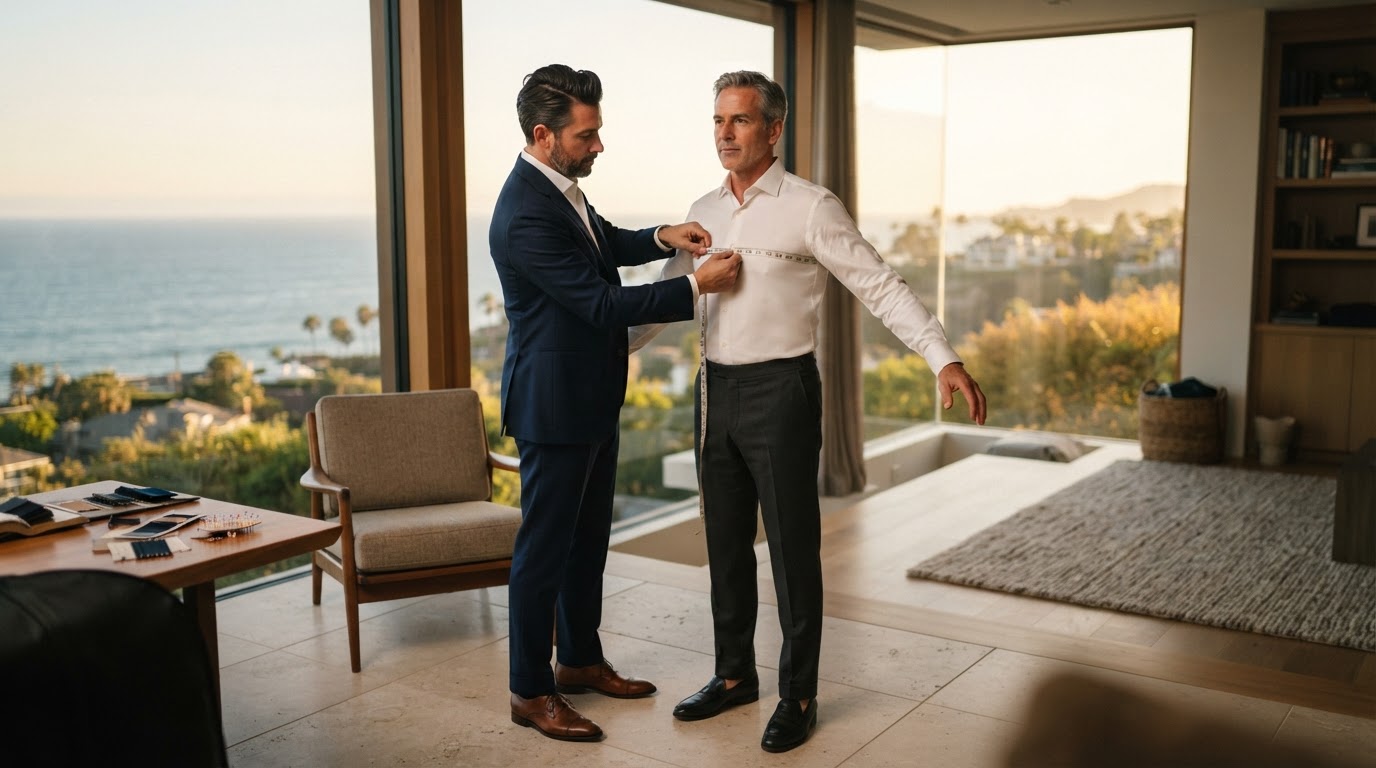
Brad pulls into your driveway on a Tuesday evening. He carries two leather cases — one holds his fabric library, the other his measuring tools. He does not go to a store because a store is the wrong place to understand a man.Instead, he sits in your living room or your office, and he starts by asking to see your closet. Not to judge — to learn. What do you reach for on a Monday morning? What still has the tags on it from two Christmases ago?What fits the body you have now, not the one you had three years ago? He asks how often you travel, whether you run hot or cold, what a typical week looks like, and what is on your calendar in the next six months — the wedding in Santa Barbara, the deposition in downtown LA, the board dinner where you need to look like you belong.This is not a sales pitch. It is a conversation between two men about how you dress and how you want to dress, and it sets the foundation for everything that follows.
Measurements and Photos
The tape measure is a tailor's most honest tool, but it cannot see everything. So Brad takes thirty-odd measurements for a suit and ten for a shirt — neck, chest, waist, sleeve, seat, the distance from your neck to the floor — and then he does something most clothiers do not.He steps back and photographs you. Three to five images, front and side, standing the way you actually stand, not the way you think you should. Because a tape measure cannot capture the slope of your shoulders, the slight forward roll of your posture from years at a desk, the way one arm hangs a quarter-inch longer than the other.Every man is asymmetric. Every man carries his history in his body. Brad reads it, records it, and drafts a personal pattern that exists for no one else on earth. No two bodies are identical. No two patterns should be either.This is the difference between a garment that fits and a garment that was made for you — and when you put it on, you will feel the difference before you see it in the mirror.
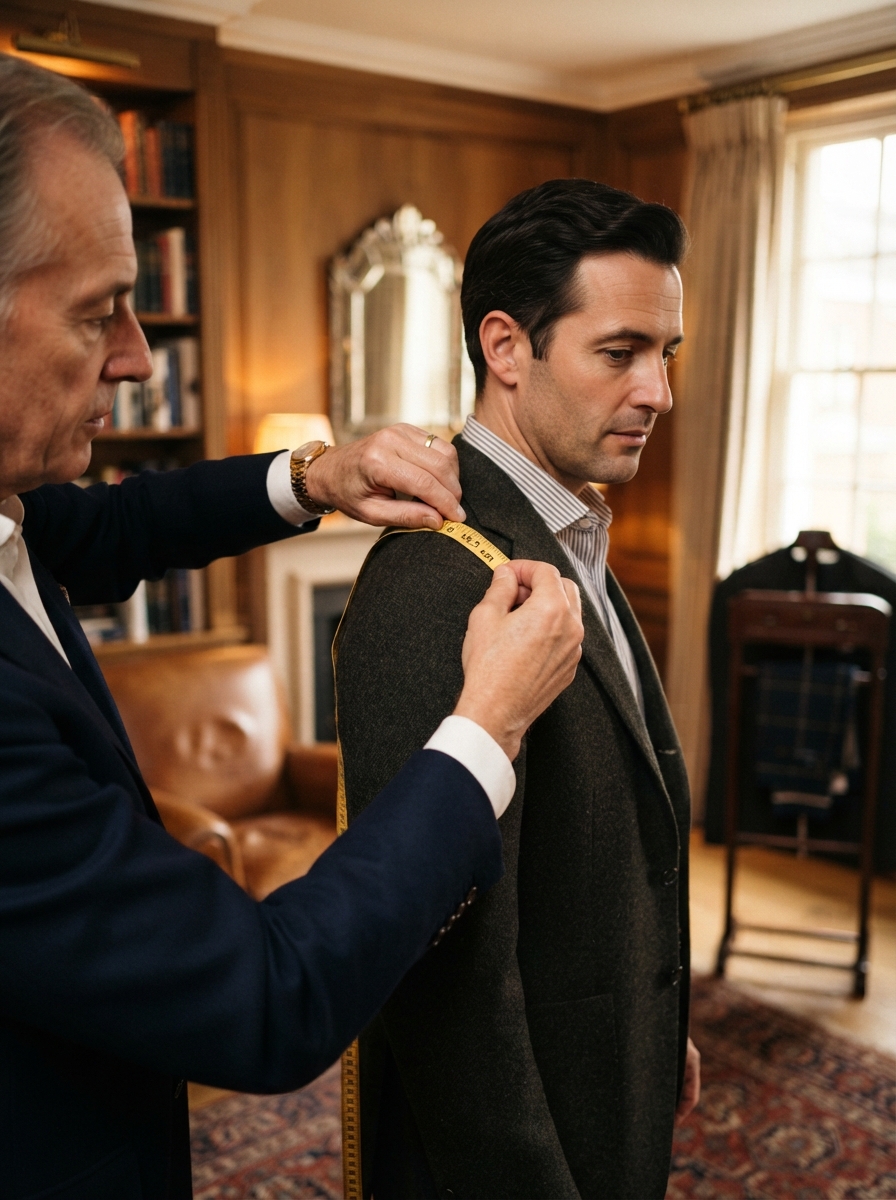
Every man is asymmetric. Every man carries his history in his body. Brad reads it, records it, and drafts a personal pattern that exists for no one else on earth.
Fabric and Style Selection
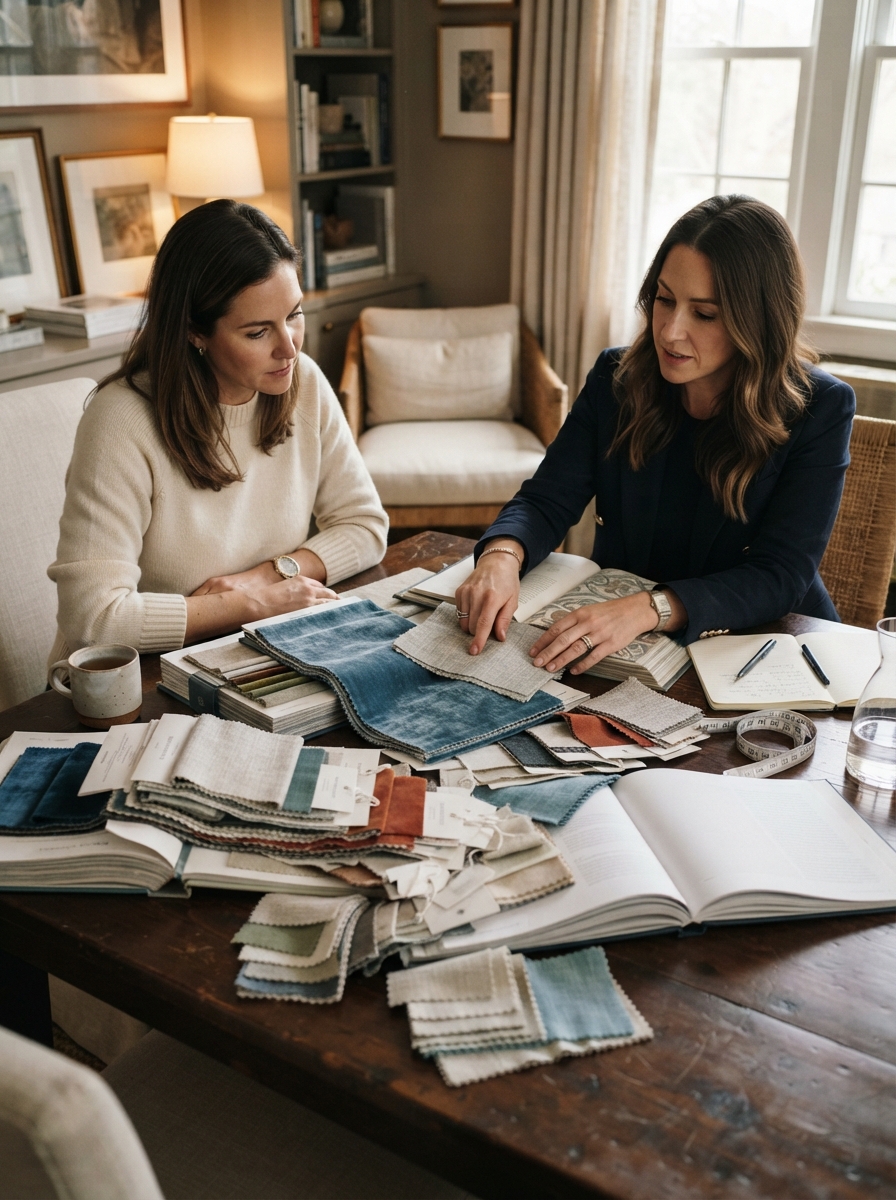
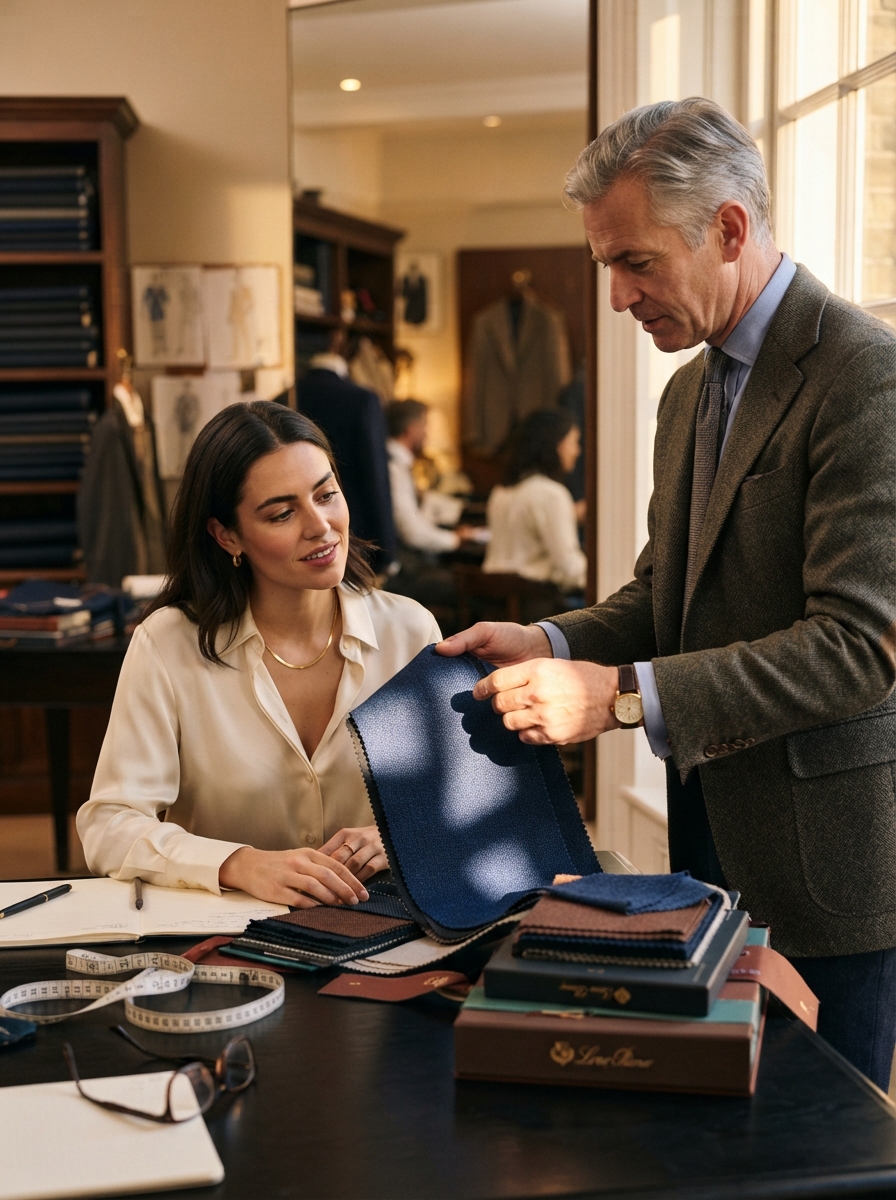
Now the fabric books come out. Zegna. Loro Piana. Dormeuil. Vitale Barberis Canonico. Scabal. Names that mean something to the people who know, and that you are about to learn.Brad lays them open on your desk or your coffee table, and you run the cloth between your fingers. A lightweight tropical wool from Biella, in the Piedmont hills of Italy, where they have been weaving since the 1600s — it breathes like linen but holds a crease like iron.A heavy flannel from Huddersfield, in the north of England, that will keep you warm at a January conference in Chicago and still drape like it was poured over your shoulders.You choose the weight, the weave, the color, and then the small things that most men never think about but that make all the difference: the collar shape on your shirt, the cuff style, the width of your lapel, whether the jacket has one button or two or three, whether the pockets are straight or slanted, whether you want hand-pick stitching along every seam.The options are endless. The experience is something most men have never had — the experience of choosing, deliberately, every detail of what they will wear.
Manufacturing
Your order leaves Southern California and travels to one of our global workshops — places where men and women have been cutting cloth and stitching canvas for generations. It takes six to eight weeks. That is not a long time for a garment that will outlast everything else in your closet.Inside the workshop, your pattern is laid on the cloth and cut by hand. A full floating canvas — horsehair, the traditional way — is hand-stitched into the chest so the jacket will roll and breathe and mold to your body over the years. The buttonholes are stitched by hand. The surgeon's cuffs are functional, so you can open them if you want to, or leave them closed if you do not.This is not an assembly line. It is a workshop of skilled hands building one garment at a time, and quality cannot be rushed. The wait is part of the value. When the garment arrives, you will understand why it took the time it did.
The Fitting and Alterations
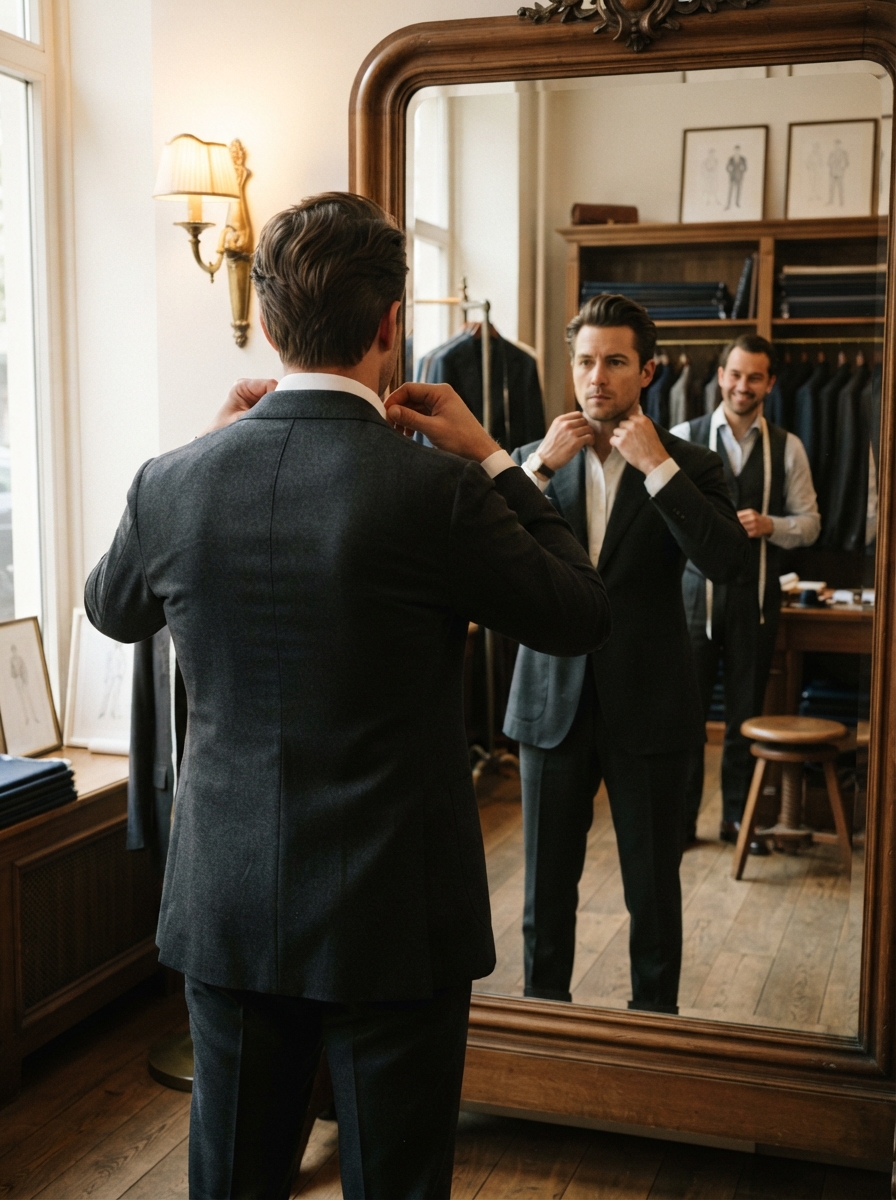
Brad returns with your finished clothing. You put the jacket on, and he circles you once, slowly. He checks the collar — does it sit clean against the back of your neck, or is there a gap?He checks the drape of the jacket over your chest, the way the sleeve falls from your shoulder, the break of the trousers against your shoe. If anything needs a final tweak — and sometimes it does, because a first commission is a conversation between the pattern and the body, and they are still getting to know each other — an in-house tailor handles the adjustment.Once your pattern is saved, future orders move faster, and the fit only gets better. This is not the end of a transaction. It is the beginning of a relationship.Most of our clients have been with us for years, and their patterns have been refined with every garment. That is the point. The first suit is good. The fifth is extraordinary.
The first suit is a draft. The second is a revision. The fifth is a masterpiece.